
Glossary
Eye care glossary
The terms you will hear at an assessment, explained in plain language. Dioptre, presbyopia, EDOF and the rest, without the shorthand clinicians use with each other.
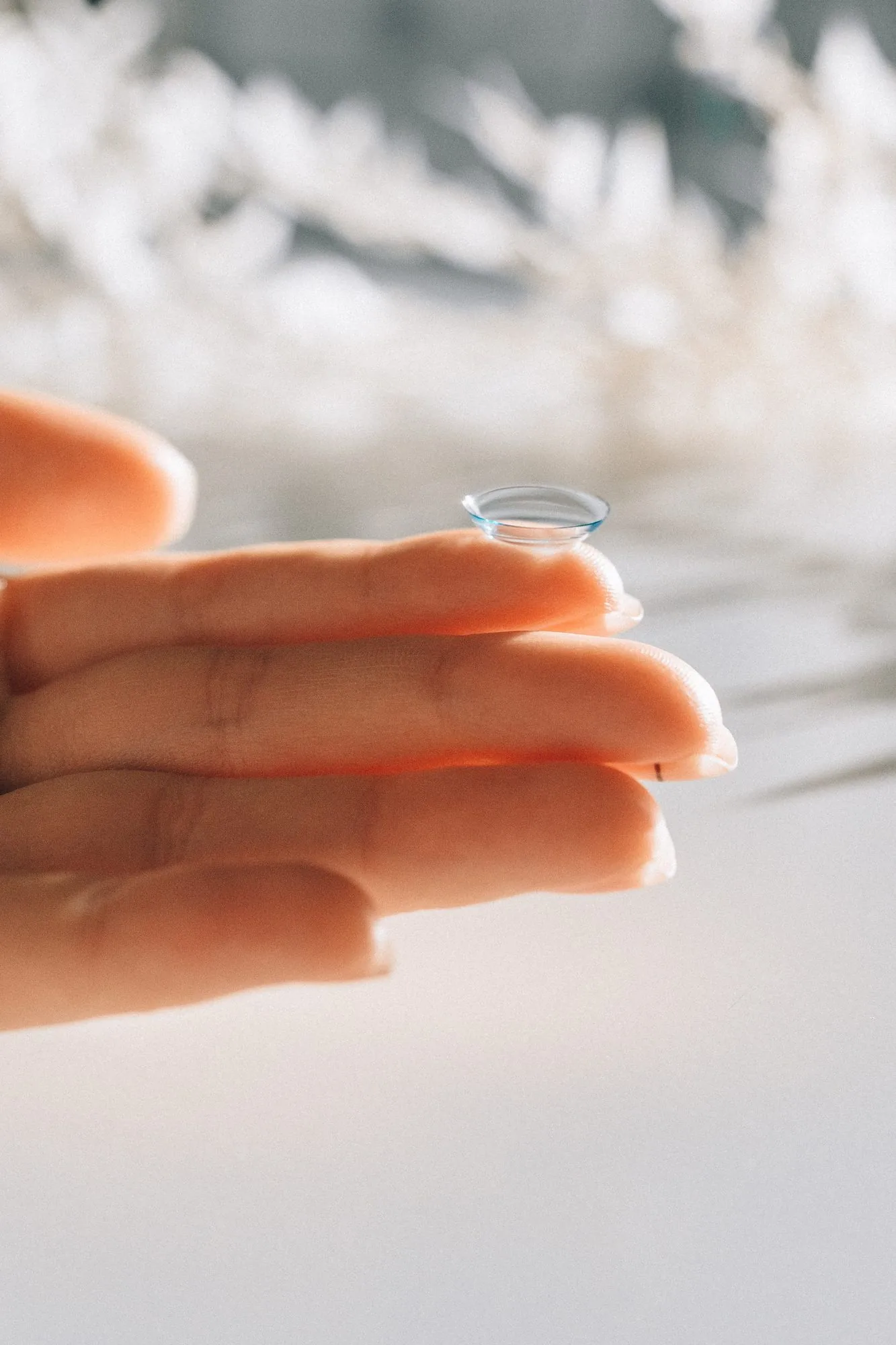
Eye surgery comes with a vocabulary of its own. These are the terms that come up most often, explained without jargon. If something is still unclear, ask your surgeon – that is what the assessment is for.
A
Accommodation
The eye’s ability to change focus between near and far by altering the shape of its natural lens. This ability declines with age, which is what causes presbyopia.
Astigmatism
An uneven curvature of the cornea, so light focuses at more than one point rather than a single point on the retina. Causes blurring at all distances. Read more.
C
Cataract
Clouding of the eye’s natural lens, causing hazy or dulled vision. Most often age-related and treated by replacing the lens. Read more.
Cornea
The clear, dome-shaped front surface of the eye. It does most of the eye’s focusing, which is why laser methods reshape it.
D
Dioptre (D)
The unit used to measure the strength of a lens or the degree of a refractive error. A larger number, positive or negative, means a stronger prescription.
Dry eye
Insufficient or unstable tear film, causing grittiness, burning or fluctuating vision. Assessed before treatment because it affects measurement accuracy. Read more.
E
EDOF lens
Extended depth of focus lens. Provides a continuous range of vision rather than distinct focal points. Read more.
Enhancement
A secondary procedure to fine-tune the result of an earlier treatment. Needed by a small proportion of patients.
Excimer laser
The laser used in LASIK, PRK and LASEK to reshape corneal tissue with high precision.
F
Femtosecond laser
An extremely fast pulsed laser used to create the corneal flap in LASIK, or the lenticule in SMILE Pro. The Carl Zeiss VISUMAX 800 is one example.
Flap
A thin hinged layer of cornea created in LASIK, lifted so the tissue beneath can be reshaped, then replaced. SMILE Pro creates no flap.
G
Glaucoma
A group of conditions where the optic nerve is damaged, often associated with raised pressure inside the eye. Checked during your assessment.
H
Halos
Rings of light seen around headlights or streetlights, particularly at night. Common after multifocal and trifocal lenses, and usually easing over months.
Hyperopia
Long-sightedness. The eye focuses light behind the retina, so near vision blurs first. Read more.
I
ICL
Implantable Collamer Lens. A soft lens placed in front of the natural lens, leaving the cornea untouched, and removable. Read more.
Intraocular lens (IOL)
An artificial lens implanted inside the eye to replace the natural lens, for example in cataract surgery or lens exchange.
K
Keratoconus
A condition where the cornea thins and bulges into a cone shape. Usually rules out laser correction, which is why it is screened for.
L
LASEK
A surface laser treatment in which the outer corneal layer is loosened rather than a flap being cut. Read more.
LASIK
Laser correction in which a thin corneal flap is created and the tissue beneath reshaped. Read more.
Lenticule
The small disc of corneal tissue shaped by the laser in SMILE Pro and removed through a 2–4 mm opening.
M
Macula
The central part of the retina responsible for detailed vision. Its health affects what any treatment can achieve.
Monofocal lens
An artificial lens with a single point of focus, typically set for distance. Reading glasses are usually still needed.
Multifocal lens
An artificial lens with more than one focal point, giving vision at several distances.
Myopia
Short-sightedness. The eye focuses light in front of the retina, so distance vision blurs. Read more.
O
Ophthalmologist
A medically qualified doctor specialising in eyes and eye surgery. All EuroEyes procedures are performed by ophthalmic surgeons.
Optometrist
A professional trained to examine eyes, measure sight and detect abnormalities, but who does not perform surgery.
P
Presbyopia
Age-related loss of near focus as the natural lens stiffens, usually noticeable from the mid-40s. Read more.
PRK
Photorefractive keratectomy. A surface laser treatment applied directly to the cornea without creating a flap. Read more.
R
Refractive error
A general term for myopia, hyperopia and astigmatism – conditions where the eye does not focus light correctly onto the retina.
Refractive lens exchange
Replacing the eye’s natural lens with an artificial one to correct vision, before any cataract has formed. Read more.
Retina
The light-sensitive layer at the back of the eye that converts light into signals sent to the brain.
S
Secondary cataract
Clouding of the thin capsule that holds an implanted lens, which can develop months or years after surgery. Treated with a short laser procedure. Read more.
SMILE Pro
A flapless laser method in which a lenticule is removed through a small keyhole opening. Read more.
T
Tear film
The thin layer of fluid covering the eye surface. A stable tear film is essential for comfort and for accurate pre-surgery measurements.
Toric lens
A lens designed to correct astigmatism as well as short- or long-sightedness.
Trifocal lens
An artificial lens with three focal points, giving vision at near, intermediate and far distances. Read more.
V
Visual acuity
A measure of the sharpness of your vision, usually expressed as a fraction such as 6/6 or 20/20.
Y
YAG capsulotomy
A short laser procedure that clears a clouded lens capsule after lens surgery, restoring clear vision in minutes.
Still unsure about a term?
Ask us at your free assessment, or see our frequently asked questions.