Lens treatment
ICL lenses
A soft lens placed in front of the eye's natural lens, with no corneal tissue removed. It may be relevant for high prescriptions and thin corneas where laser treatment is not an option, and it can be removed again if your needs change.
30+ years of experienceFree assessmentAn experienced treatment team throughout

What are ICL lenses?
An ICL (Implantable Collamer Lens) is a soft, biocompatible lens placed gently inside the eye in front of the eye's natural lens. It corrects short-sightedness, long-sightedness and astigmatism without removing corneal tissue.
ICL is an abbreviation of Implantable Contact Lens and can be an alternative to laser treatment. The refractive error is corrected by inserting a lens in front of the eye's natural lens. The ICL lens can be neither felt nor seen. The treatment can correct short-sightedness and long-sightedness as well as refractive errors combined with astigmatism.
An ICL treatment may be relevant for people under 45 who have large refractive errors and have not yet developed presbyopia.
An ICL treatment may be an option for large refractive errors (short-sightedness up to −18 dioptres and long-sightedness up to +10 dioptres) and for thin corneas, where laser treatment is not a suitable solution.
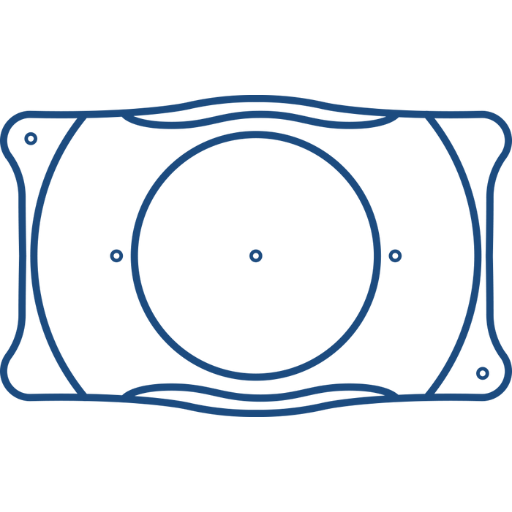
To correct astigmatism, a so-called toric ICL is used. The toric lens implants are made individually for each patient and are supplied with a precisely measured implantation chart showing exactly where the lens is to be positioned.
Together with the eye's natural lens, the ICL ensures that light is focused correctly on the retina. The treatment can thereby reduce the need for glasses or contact lenses.
An ICL treatment can reduce your need for glasses and contact lenses. The ICL is a permanent artificial lens that does not replace the eye's natural lens. It can therefore be removed again if you later develop presbyopia and need a different lens treatment.
ICL can be a good option for people with larger refractive errors or thin corneas who are not suitable for laser treatment. The lens is invisible, cannot be felt and can be removed again if it becomes necessary. That makes the treatment a flexible option for vision correction.
How it works
Precise measurements
Detailed scans determine the exact lens size and power for your eye.
Implant the lens
In a gentle, minimally invasive procedure the folded lens is placed through a tiny opening and settles into position.
Instant clarity
Many patients notice markedly clearer vision shortly after the treatment. Vision typically stabilises over the following days.
The treatment process
1. Free, no-obligation assessment
At the free, no-obligation assessment for eye treatment, the optometrist measures all relevant eye parameters. Based on the measurements, we go through which treatment options may be relevant for you and what benefits the individual treatments can offer.
2. Measurements
If you choose an ICL lens, we carry out a further examination and measurement before the treatment. Before the examination, you must avoid wearing contact lenses for at least one week, as they can change the shape of the cornea and thereby affect the measurements. If you wear hard contact lenses, you must avoid them for at least two weeks before the examination.
During the measurement session, the sight test is carried out after you have been given pupil-dilating eye drops. The drops can affect your vision for up to 24 hours, so you should not drive immediately after the examination.
3. The ICL treatment
Preparing the eye
The treatment is a routine procedure. It is performed on an outpatient basis and takes about 10 minutes per eye. The eye is numbed with anaesthetic eye drops so the treatment is pain-free.
The implantable contact lens
The ICL is a clear synthetic lens. It resembles an ordinary contact lens. The lens is very small and extremely soft, so it can be folded up completely and placed easily and gently in the eye via an injector in a matter of seconds. The injector is introduced through a small incision in the cornea.
Vision correction with the ICL contact lens
Unlike ordinary contact lenses, the ICL lens is placed in the posterior chamber between the iris and the eye's natural lens. There it is neither visible nor perceptible. Working together with the natural lens, the ICL ensures that light converges correctly on the retina, thereby correcting the refractive error. After the treatment, your need for glasses or contact lenses can be reduced.
Key benefits
High prescriptions
Corrects strong myopia and astigmatism where laser may not be suitable.
Tissue-sparing
No corneal tissue is removed.
Invisible
Cannot be seen or felt once in place.
Removable
The lens can be removed or exchanged if ever needed.
Kind to dry eyes
A great option for patients prone to dryness.
Fast recovery
Many people notice clearer vision within the first 24 hours.


Advantages of an ICL lens
- Outpatient treatment with local anaesthetic eye drops
- Treatment of higher refractive errors
- The ICL is neither visible nor perceptible
- The ICL has high biocompatibility and is therefore well accepted by the body
- Total duration of the eye treatment: approx. 20 minutes
Is this treatment right for you?
ICL may be relevant for adults with larger refractive errors, thin corneas or dry eyes. At the free assessment for eye treatment, we clarify whether ICL may be a relevant treatment option for you.
- You are between roughly 21 and 45 with a stable prescription
- You have a higher degree of short-sightedness
- You have thinner corneas or dry eyes
- You may not be suitable for laser surgery
- You want a reversible, tissue-sparing option
Suitability guide
Which treatment options might be relevant for you?
Four quick questions for a first, no-obligation indication of which treatments may be relevant based on your answers.
Anonymous and non-binding. This is guidance, not a medical assessment or diagnosis.
Recovery & aftercare
Recovery after ICL is typically fast and comfortable. You will use antibiotic and lubricating drops for a short period, and many patients see clearly within a day.
After the treatment, you should avoid rubbing your eyes. For a period, you will need to use both antibiotic and lubricating eye drops. Before the treatment, we go through how often you should use the drops, and you are given drop instructions. You will typically be able to return to work after 2–4 days, depending on the nature of your work.
You can usually resume sporting activities after about 3 days. Wait with swimming and saunas, however, until the treatment team recommends it.
Follow-up checks are carried out after the treatment: a check the day after and a check after six weeks. If further checks are needed, they are covered by EuroEyes’ lifelong peace-of-mind guarantee.
Avoid rubbing your eyes, and take a break from swimming and strenuous exercise for the period the treatment team recommends. At the follow-up checks, we monitor whether the lens is correctly positioned and whether healing is progressing as expected.
Why choose EuroEyes?
An experienced treatment team
You are accompanied by our experienced treatment team throughout – from the first examination to the final follow-up check.
Treatment volume
More than one million eyes have been treated at EuroEyes clinics worldwide.
Aftercare included
Scheduled follow-up checks are included in your all-inclusive treatment price.
Advanced technology
We use advanced, modern technology for eye treatment.
Peace of mind and quality
We offer a lifelong peace-of-mind guarantee on treatments performed at EuroEyes.
Award-winning expertise
Our eye doctors have extensive experience in lens treatments, including the implantation of ICL lenses.
Learn more at our free webinars and information evenings
We regularly hold information evenings and webinars where our eye doctors explain the treatments at EuroEyes and answer questions.
“For higher prescriptions, ICL is remarkable – crisp, stable vision with a lens that is invisible and, if ever needed, removable.”Dr. Jørn Slot Jørgensen – Founder, Medical Director and CEO of EuroEyes
Expert care at EuroEyes

What our patients say
Independent reviews collected by Trustpilot.
697 reviews on Trustpilot
Reviews on Google
Frequently asked questions
Can I feel the ICL in my eye?
No. Once in place the lens is completely invisible and cannot be felt.
Is ICL reversible?
Yes – unlike laser surgery, the ICL can be removed or exchanged if your needs change.
Is it suitable for high prescriptions?
Yes, ICL can be a relevant treatment option for strong short-sightedness and astigmatism.
Does ICL help with dry eyes?
ICL may be relevant for patients prone to dry eyes, because the treatment removes no corneal tissue.
How fast is recovery?
Many patients see clearly within a day, with full results over the following days.
Why choose an ICL treatment?
ICL is a gentle method for correcting refractive errors and may also be relevant for large refractive errors where laser treatment is not an option. The treatment can reduce the need for glasses and contact lenses.
Will I be able to feel the artificial lens in my eye?
No, the implanted lens can be neither felt nor seen in the eye.
How long does an ICL lens last?
The ICL lens is intended to remain permanently in the eye, but it can be removed or replaced if necessary. The treatment is therefore reversible.
In rare cases (five per cent measured over the past five years), an early clouding of the natural lens (cataract) can occur. In that case, both lenses will be exchanged and replaced with new intraocular lenses.
The development of the ICL
The implantable contact lens (ICL) is the result of many years of research and development and has been on the market since 1993. The lens implant has contributed to developments in lens surgery and is used today to correct several types of refractive error.
EuroEyes offers a wide selection of modern lens types in individually tailored powers. The choice of lens is based on your measurements and your visual needs, with the aim of achieving the best possible result.
Arrange your free assessment
Book a free, no-obligation assessment at your nearest EuroEyes clinic.
Related to ICL lenses
Read more about the refractive errors that can be corrected with ICL lenses, alternative treatments and the eye doctors who perform the treatment.