

Clinics in Denmark
- Copenhagen
- Aarhus
- Aalborg
Tired of glasses?
See clearly again – at every distance. Over 30 years of experience treating vision defects in Denmark. EuroEyes clinics across the country.
Which solution suits your eyes?
The right vision correction depends on your age. Choose your age group below and we’ll guide you to the treatments that precisely match your vision.

Why patients choose EuroEyes
Leading expertise in the treatment of presbyopia.
Over 30 years of experience, international specialist knowledge and the world record in ZEISS trifocal lens procedures give you the reassurance you deserve.
World record in ZEISS trifocal lenses.
EuroEyes is the global market leader in advanced vision correction and holds the official world record for the most implantations of ZEISS trifocal lenses.
International expertise.
Leading expertise · 30 years of documented experience · More than 500,000 eye treatments · World record in ZEISS trifocal lenses.
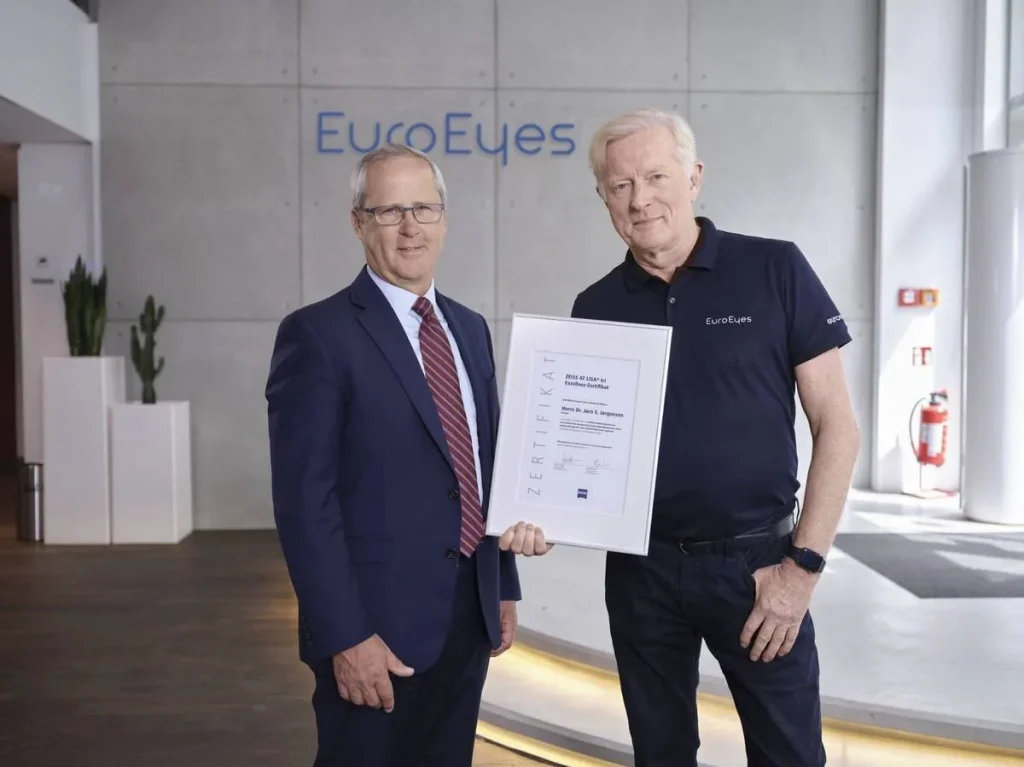
Who treats you
Experience and expertise you can trust
Led by Martin, Jannik Boberg-Ans and Dr. Jørn Jørgensen, you’ll meet one of the country’s most experienced surgical teams in vision correction. Our specialists combine leading international research with decades of practical experience, so you are always in the safest hands – from the first consultation to your new vision.
Dr. Jannik Boberg-Ans
Eye surgeon · Medical Director, EuroEyes Denmark
Third generation of eye surgeons and among the country’s leading. Masters every type of procedure – lens as well as laser surgery – after nearly 30 years.
Dr. Jørn S. Jørgensen
Founder & CEO
Founder of EuroEyes and pioneer of refractive & lens surgery – 30+ years and tens of thousands of personally performed procedures.

Dr. Martin Severinsen
Eye surgeon · Lens & laser surgery
Former senior consultant at Hillerød responsible for advanced lens surgery. ReLEx SMILE-treated himself and EBO examiner.
Dr. Mads Kofod
Eye surgeon · Specialist in ophthalmology
PhD from Rigshospitalet. Performs lens exchange, refractive laser and ICL. Former consultant and team lead at Rigshospitalet.
Dr. Anders Søndergaard
Eye surgeon · Head of surgery, Jutland
PhD in ophthalmology (corneal biomechanics), Aarhus. Former consultant at Vejle Hospital. Corrects vision defects with lens exchange.
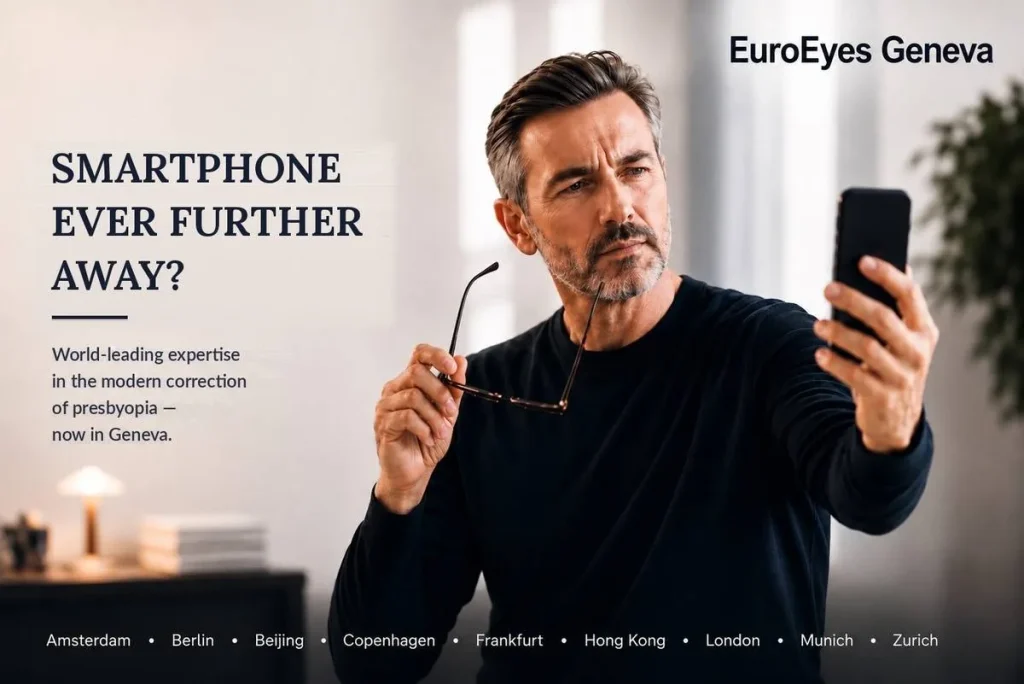
Everything you want to know about life without reading glasses.
Get answers to the most important questions: how presbyopia arises, when it begins, and how it can be treated.
Click here
How does presbyopia arise?
Over the years, the eye’s natural lens loses its elasticity. It can no longer curve enough to focus up close – reading and near work become a strain. It is a completely normal ageing process, not a sign of disease.
When does presbyopia begin?
Usually between 40 and 50. Typical first signs: you hold text further away, need more light to read, or your eyes tire more quickly during near work.
Can presbyopia be prevented?
No. The loss of elasticity in the lens cannot be stopped – neither with eye exercises nor diet. It can, however, be corrected very effectively or resolved permanently.
How does it develop over the years?
Presbyopia increases slowly until around age 60–65 and then stabilises. During that period, reading glasses often need adjusting several times as the prescription changes.
What treatments exist today?
Beyond glasses and contact lenses there are permanent solutions: a lens exchange with a trifocal lens or the laser treatment PRESBYOND. Which path suits you is determined at the free assessment in Copenhagen.

From 45, it affects almost everyone
When your arms become too short.
From around age 45 the eye’s natural lens loses its elasticity. Reading up close becomes harder, the menu drifts out to arm’s length, and later the screen blurs too. Presbyopia is not a disease but a natural process – neither medication nor eye exercises can stop it.
- 45+
- Typical age at which presbyopia begins
- 100%
- Affects everyone sooner or later
- Permanent
- Can be corrected with modern eye surgery
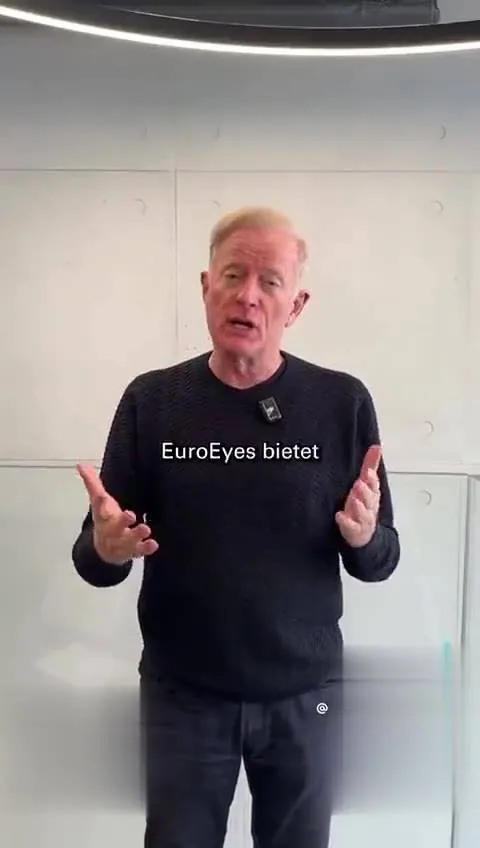
Meet your surgeon
Presbyopia, explained by the surgeon himself.
In under two minutes, Dr. Jørn Jørgensen – founder of EuroEyes – explains why the need for reading glasses arrives after 45, and how a lasting correction works.
Why it happens
With age, the eye’s natural lens loses its flexibility. This is completely normal and easy to correct.
What can be done
A modern lens replacement (RLE) restores clear vision at every distance.
No more compromises
A safe and realistic path to a life without reading or varifocal glasses.
Step by step
The path to everyday life without glasses
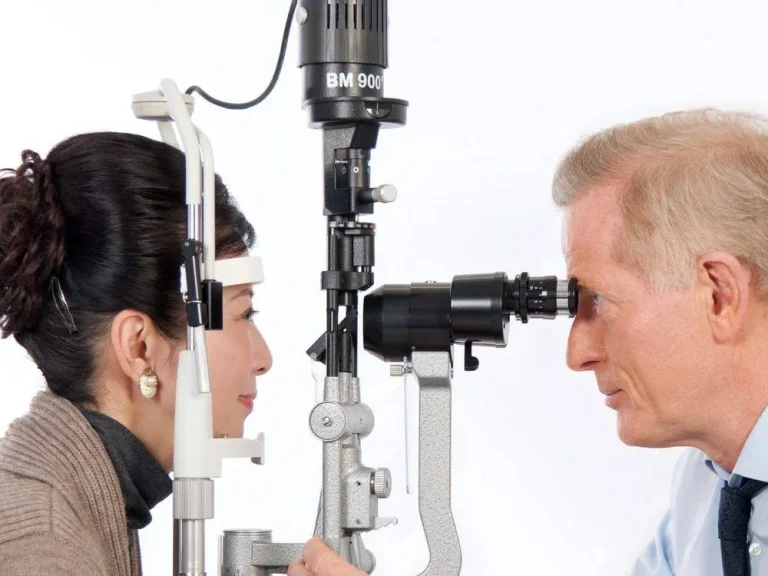
Pre-examination
Every eye is unique and requires an individually tailored lens. All vision defects are analysed thoroughly – supported by artificial intelligence (AI). The personal consultation matters just as much to us, so the treatment fits your expectations and your everyday life.
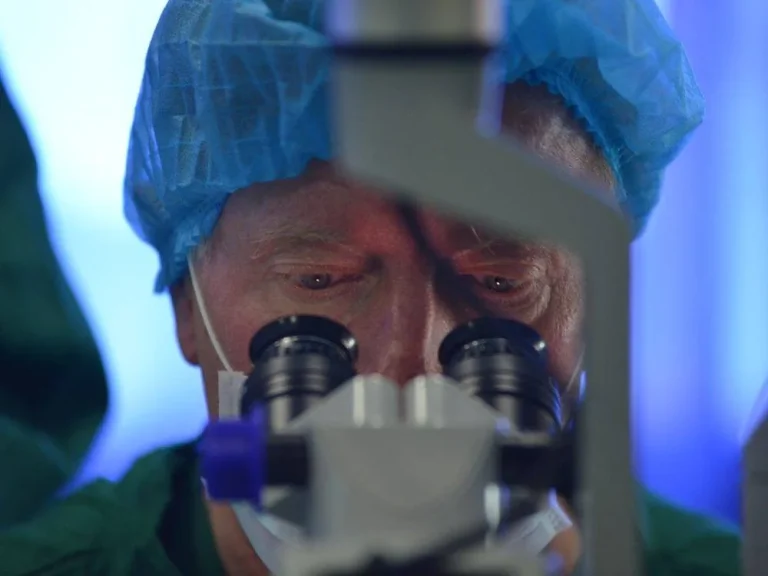
The treatment itself
The treatment is fast and gentle – usually under 30 minutes for both eyes. Your eyes are numbed with drops, the procedure is painless and performed under local anaesthesia. Which method is used – trifocal lens, EDOF or PRESBYOND – depends on your assessment and your wishes. You go home without a bandage and start your eye drops right away.

Aftercare
You leave the clinic without a bandage over your eyes and are quickly back to everyday life.
- Fast recovery: typically back at work after 2–3 days.
- Clear check-up plan: follow-ups the next day, after a week and after a month.
- Round-the-clock reassurance: access to our emergency line and your nearest clinic at any time.
Our treatments for presbyopia
Three paths to a life without reading glasses.
All three treatment methods are developed to correct presbyopia from around age 45 and are individually tailored to your eyes, your vision and your lifestyle.
Lens exchange · permanent
Trifocal lenses
Sharp vision at all distances – usually entirely without glasses. Trifocal lenses are advanced premium lenses that replace the eye’s natural lens. They give sharp vision at near, intermediate and far distance, so you can usually manage entirely without glasses. At EuroEyes we primarily use trifocal lenses developed in close collaboration with ZEISS. Because the lens is permanent and neither wears out nor clouds over, you can no longer develop cataracts later either. At the same time, existing short-sightedness, long-sightedness and astigmatism are corrected in one and the same treatment.
Ideal for: the permanent solution that lasts a lifetime.
Lens exchange · extended depth of focus
EDOF lenses
EDOF stands for “Extended Depth of Focus”. Unlike the trifocal lens with fixed focal points, it creates one continuous zone of sharpness and gives clear, high-contrast vision at far and intermediate distance – at the screen or behind the wheel, for example. Because the lens scatters very little light, halos and glare at night are rarer – a good choice for frequent drivers and people with high visual demands. For reading up close, a pair of light reading glasses is usually still needed.
Ideal for: screen work, driving and dusk with the highest visual comfort.
Laser treatment · instead of a lens
PRESBYOND
PRESBYOND is a laser treatment (“Laser Blended Vision”) from ZEISS, developed by Professor Dan Reinstein of EuroEyes. It suits people from around 40 to 50 and works without a lens exchange: the cornea is shaped individually with a precise excimer laser, with each eye optimised separately for near and far. Through a personally calculated “blend zone”, the visual impressions merge at intermediate distance, so near, intermediate and far are all perceived sharply. Existing short- or long-sightedness and astigmatism can be corrected at the same time – a good solution for active people who want to do without visual aids. Later, reading glasses may become necessary for close-up vision, while intermediate distance remains good.
Ideal for: active people who want to keep their own lens.
Not sure which route suits you? Take the suitability test – or find out at the free assessment in Copenhagen.
Which route suits you?
EuroEyes suitability test.
Four short questions – and you get a first, no-obligation indication of which treatment could suit your eyes and your lifestyle.
No obligation & anonymous. Not a medical diagnosis – just a first guide.
Your next step
Book a free eye check.
Find out whether presbyopia treatment is the right solution for you. No obligations. No pressure. Just professional advice.
- Free eye check
- Thorough examination of your eyes
- Personal recommendation from an eye surgeon
Laser treatment for your eyes
Let go of the glasses
Denmark’s leading clinic for SMILE laser treatment.
The most in Europe. The EuroEyes Group has the most SMILE lasers in Europe. Co-developed by us. EuroEyes surgeons co-developed the SMILE laser technology.
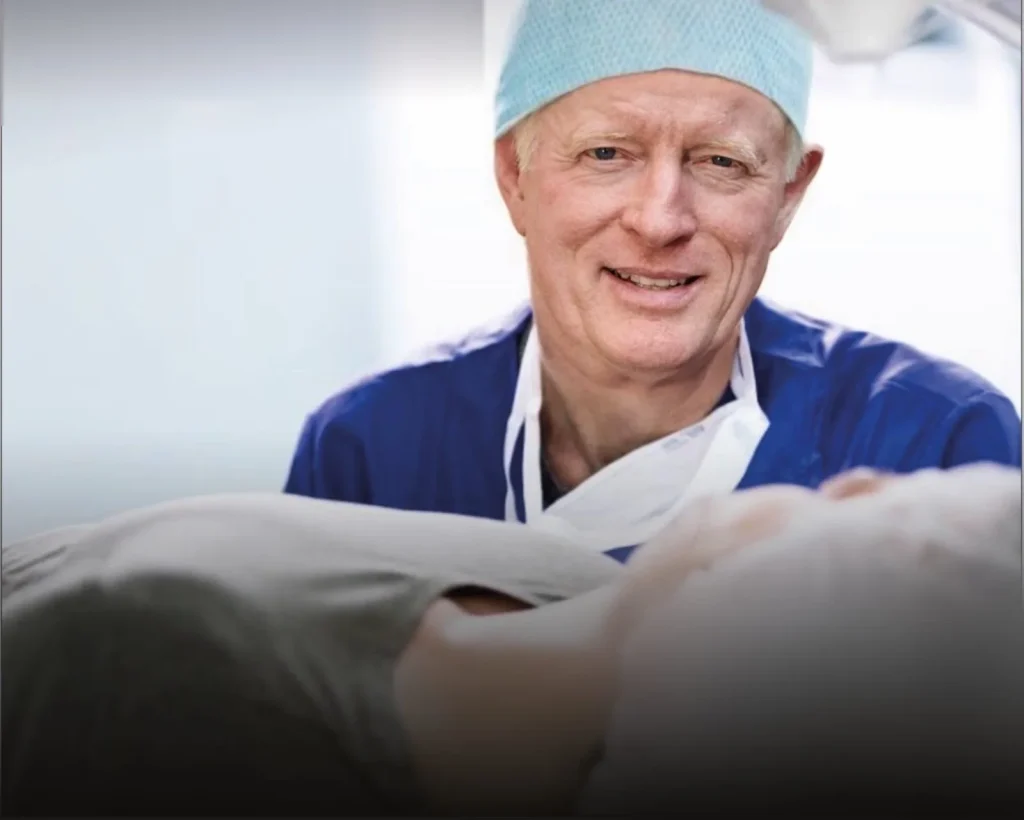
Dr. Jørgensen explains
How can a laser remove myopia and glasses?
2 min · with Dr. Jørn Jørgensen, founder of EuroEyes
Why have your treatment at EuroEyes Denmark?
Never compromise on your vision.
30 years of experience.
Over 500,000 successful laser treatments worldwide.
First in Denmark.
The first in Denmark to perform LASIK treatments.
Co-developed by EuroEyes.
EuroEyes surgeons co-developed the SMILE laser treatment.
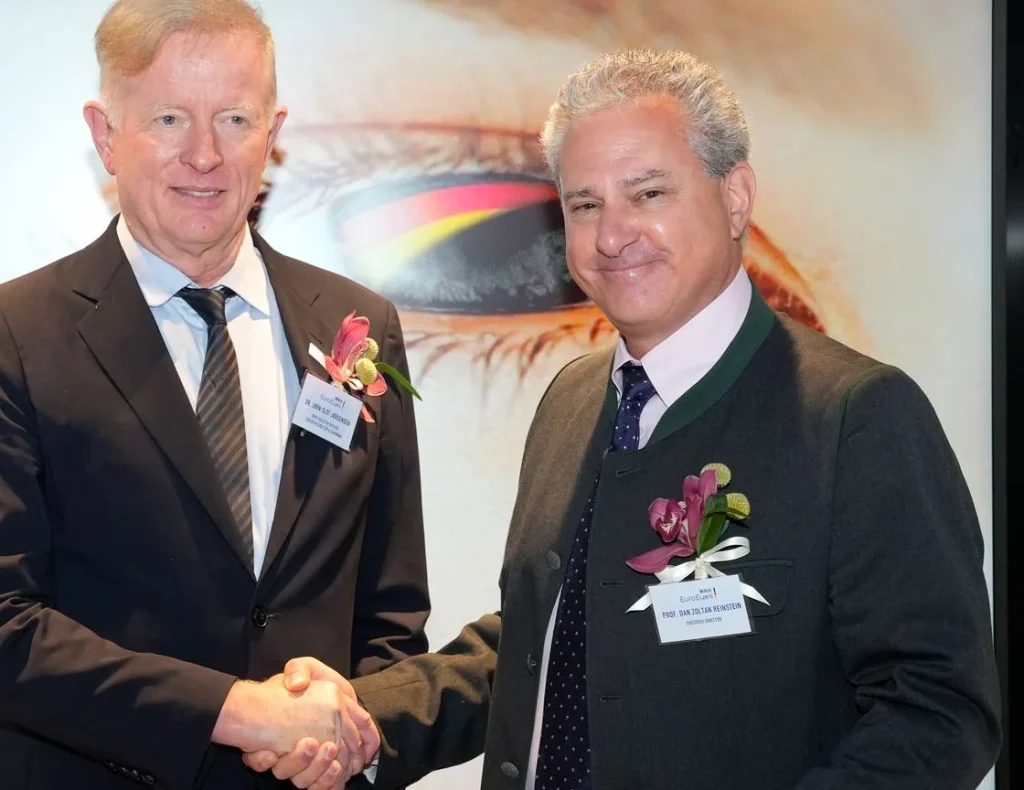
Who treats you
Meet your surgeons.
The pioneers. Prof. Reinstein helped invent the SMILE treatment and develop the ZEISS VisuMax laser.
96% success rate. At the group’s London Vision Clinic – where every procedure is measured and published – 96% of patients achieve 20/20 vision or better.

Dr. Jannik Boberg-Ans
Eye surgeon · Medical Director, EuroEyes Denmark
Third generation of eye surgeons and among the country’s leading. Masters every type of procedure – lens as well as laser surgery – after nearly 30 years.
Dr. Jørn S. Jørgensen
Founder & CEO
Founder of EuroEyes and pioneer of refractive & lens surgery – 30+ years and tens of thousands of personally performed procedures.

Dr. Martin Severinsen
Eye surgeon · Lens & laser surgery
Former senior consultant at Hillerød responsible for advanced lens surgery. ReLEx SMILE-treated himself and EBO examiner.

Dr. Mads Kofod
Eye surgeon · Specialist in ophthalmology
PhD from Rigshospitalet. Performs lens exchange, refractive laser and ICL. Former consultant and team lead at Rigshospitalet.

Dr. Anders Søndergaard
Eye surgeon · Head of surgery, Jutland
PhD in ophthalmology (corneal biomechanics), Aarhus. Former consultant at Vejle Hospital. Corrects vision defects with lens exchange.
Considering SMILE? Clear answers to your most important questions.
Get answers to the most important questions: what short-sightedness is, who SMILE suits, and how the treatment works.
Click here
What is short-sightedness (myopia)?
In a short-sighted eye, the eyeball is slightly too long, so distant objects focus in front of the retina and appear blurred. Glasses, contact lenses or laser treatment move the focus back onto the retina, so you see clearly at distance.
Who is SMILE suitable for?
Most adults with stable short-sightedness, with or without astigmatism. Because the surface layer stays intact, SMILE can often treat higher prescriptions and is often the preferred choice for people with thinner corneas or dry, more sensitive eyes. It is not suitable for severe long-sightedness. The free assessment confirms whether SMILE is right for you.
Does the treatment hurt?
No. The eye is numbed with drops, and the gentle ZEISS VisuMax laser keeps the pressure in the eye low – most people feel almost nothing. A mild foreign-body sensation for a few hours afterwards is normal and passes quickly.
How fast is the recovery?
SMILE has the fastest recovery of all laser methods. The procedure itself takes minutes, and the eye’s surface typically heals within a few days. Because no flap is made in the cornea, there is no risk of flap displacement – so you can return to an active life, including sport, sooner.
Where do I find all the details about SMILE?
You can explore the full story of SMILE – the technology, the research and the patient results – at euroeyes.dk. The free assessment in Copenhagen then confirms what is right for your eyes.
See how the SMILE laser corrects myopia in seconds
Watch the animation and see how modern laser eye treatment works.
Treatment process
How the treatment works – step by step.
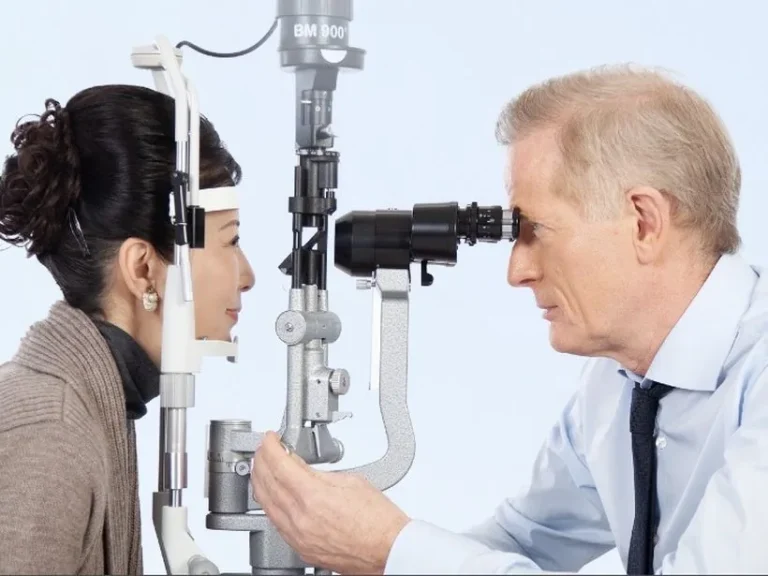
Pre-examination
Every eye is unique and requires an individually tailored treatment. All vision defects are analysed thoroughly – supported by artificial intelligence (AI). The personal consultation matters just as much to us, so the treatment fits your expectations and your everyday life.
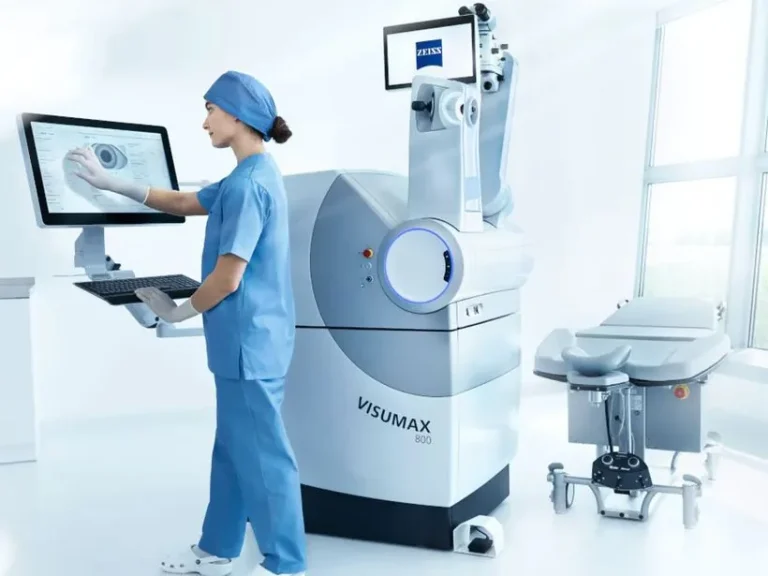
The treatment itself
The SMILE treatment is fast and gentle – typically around 10–15 minutes for both eyes. Your eyes are numbed with drops, so it is painless. A precise femtosecond laser shapes a thin lenticule, which is removed through a 2–4 mm keyhole opening. You go home without a bandage and start your eye drops right away.

Aftercare
You leave the clinic without a bandage over your eyes and are quickly back to everyday life.
- Fast recovery: typically back at work after 2–3 days.
- Clear check-up plan: follow-ups the next day, after a week and after a month.
- Round-the-clock reassurance: access to our emergency line and your nearest clinic at any time.

Laser eye treatment at EuroEyes
Three paths to a life without glasses and contact lenses.
We offer the full spectrum of modern laser eye treatments. Which method is right for you depends on your eyes, your vision and your lifestyle. That is clarified at a free, no-obligation assessment.
Keyhole laser · our speciality
SMILE
The most minimally invasive form of laser eye surgery. Co-invented by Prof. Dan Reinstein at London Vision Clinic – part of the EuroEyes group – on the ZEISS VisuMax laser. SMILE corrects short-sightedness and astigmatism through a small keyhole opening, with no corneal flap and without removing the surface layer. Because more of the cornea is preserved, dry-eye symptoms are typically reduced, and recovery is the fastest of all laser methods. With no flap, there is no concern about flap displacement during sport – ideal for an active life. More than 1.5 million SMILE procedures have been performed worldwide.
Ideal for: an active life – sport, travel and freedom from glasses.
Laser · established & precise
Femto-LASIK
A well-established laser method for short- and long-sightedness as well as astigmatism. A thin flap is made in the cornea, which is then shaped with a precise excimer laser so light focuses correctly on the retina. Femto-LASIK gives very fast visual recovery – many see well by the next day – and is one of the world’s most widely performed vision correction procedures.
- Outpatient
- a few minutes per eye
- Painless (anaesthetic drops)
- Very fast recovery
Ideal for: a proven laser option with fast recovery.
Laser · surface treatment
PRK / LASEK
A surface laser method where the outermost layer of the cornea is gently moved aside instead of making a flap. The cornea is then shaped with a precise excimer laser. PRK/LASEK is a good choice for thinner corneas or particular eye profiles where a flap-based method is less suitable. Recovery takes a little longer than SMILE or LASIK, but the long-term results are excellent.
- Outpatient
- Painless (anaesthetic drops)
- No flap in the cornea
- For thinner corneas
Ideal for: thinner corneas or particular eye profiles.
Not sure which route suits you? Take the suitability test – or find out at the free assessment in Copenhagen.
Which route suits you?
EuroEyes suitability test.
A few short questions – and you get a first, no-obligation indication of whether SMILE could suit your eyes and your lifestyle.
No obligation & anonymous. Not a medical diagnosis – just a first guide.
Your next step
Book a free eye check.
Find out whether laser treatment is the right solution for you. No obligation. No pressure. Just professional advice.
- Free eye check
- Thorough examination of your eyes
- Personal recommendation from an eye surgeon