Lens treatment
Trifocal lenses
A lens with three focal points that gives reading, screen and distance vision in a single procedure and also means that cataract cannot later develop in the treated lens. Most patients become independent of glasses for everyday life.
30+ years of experienceFree assessmentMedical assessment and treatment

What are trifocal lenses?
Trifocal lens implantation replaces the eye's natural lens with a premium artificial lens that has three focal points – for near, intermediate and far vision. It is the most complete solution for presbyopia (age-related loss of near focus) and an outstanding way to correct vision permanently.
A treatment with multifocal lenses may be relevant for you if you are over 45, whether you are short-sighted, long-sighted and/or have astigmatism.
By having multifocal lenses implanted, you have your presbyopia and any other refractive errors corrected, and you can look forward to everyday life without glasses, reading glasses or contact lenses.
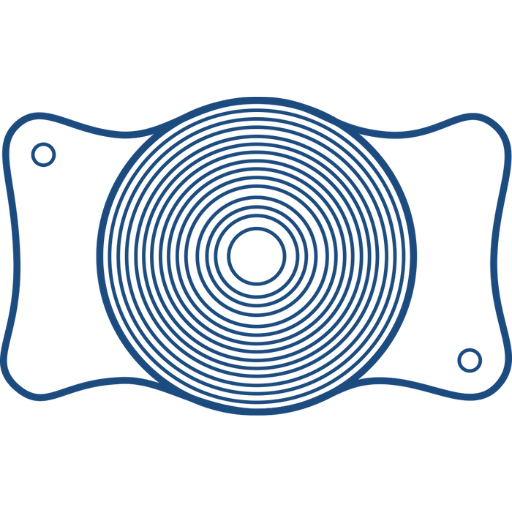
A trifocal lens is an artificial lens that replaces the eye’s natural lens. It is a type of multifocal lens and has three focal points: for distance vision, vision at intermediate distance and reading vision.
Implantation of trifocal lenses is an intraocular procedure and is performed on the same principle as an ordinary cataract operation. In other words, the treatment has been used for more than 30 years and is one of the safest surgical treatment methods of all.
Because the natural lens is removed, you can never develop cataracts in the future. Most patients enjoy a life free from glasses and reading glasses, seeing clearly whether they are reading, working at a screen or driving.
How it works
Measure & plan
Advanced diagnostics map your eyes precisely so your surgeon can select the ideal lens power.
Replace the lens
In a gentle 15-minute procedure per eye, the natural lens is replaced with your trifocal lens under local anaesthetic.
Adapt & enjoy
Your brain quickly adapts to the three focal points, and vision continues to sharpen over the following weeks.
The treatment process
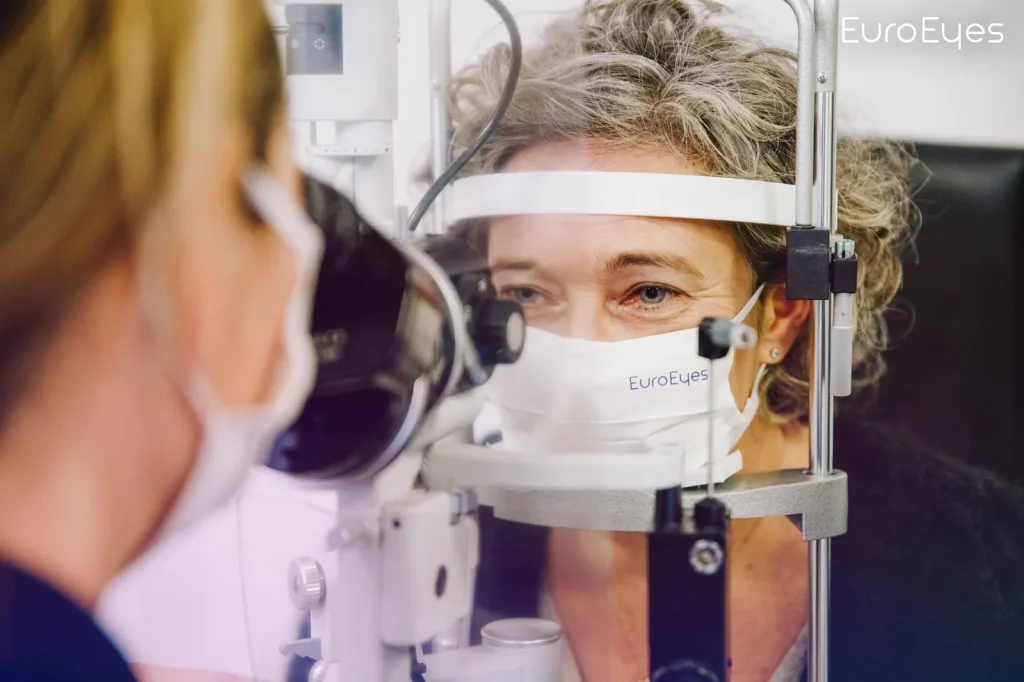
Before you have a lens exchange with trifocal lenses, you will have attended an eye examination and measurement session with one of EuroEyes’ specially trained opticians at one of our three clinics in Denmark.
From the measurement session to the day the lenses are implanted, typically 2–3 weeks pass, because we order lenses based on your individual measurements. If we already have the relevant lenses in stock, the treatment may be carried out sooner.
The treatment is performed by one of EuroEyes’ eye surgeons, each of whom carries out more than 1,000 vision-correcting treatments a year.
Method
The lens exchange itself is performed under local anaesthetic with eye drops and takes about 10–15 minutes per eye.
In the first step, the eye's own lens is removed. Through a small incision of 2.5–2.8 mm, the anterior capsule is removed.
Using ultrasound, the lens that fills the capsular bag is removed. The capsular bag is then completely cleaned of cells so that it appears entirely clear.
The new lens is then inserted. The power of the lens is carefully calculated on the basis of the measurements taken before the treatment. The lens is folded so it can be introduced through the small incision, after which it unfolds and settles firmly in the lens capsule. The lens lasts a lifetime.
As the incision is so small, it closes immediately and heals by itself over a few weeks.
The multifocal lenses we use at EuroEyes come from recognised manufacturers and meet high quality standards. We use lenses from Zeiss, FineVision and Alcon.
Key benefits
All distances
Sharp vision at near, intermediate and far.
Glasses-free living
Most patients no longer need glasses or reading glasses.
No future cataracts
The natural lens is replaced, so cataracts cannot form.
Quick & comfortable
About 15 minutes per eye under local anaesthetic.
Long-term result
A permanent, stable correction.
Premium optics
Lenses from established manufacturers, including Carl Zeiss.


Is this treatment right for you?
Trifocal lenses are an option for adults over 45 who want to reduce their dependence on glasses. At the assessment, we assess which type of lens may be best suited to your vision and your lifestyle. Individual results vary.
Presbyopia
Presbyopia typically sets in between the ages of 40 and 50.
You notice presbyopia developing when reading becomes difficult – especially small print in dim lighting.
You may know the experience of your arms suddenly being too short to read a book or newspaper, and you need reading glasses. If you have suffered from short-sightedness or long-sightedness all your life, you will most likely develop presbyopia sooner or later.
If you already have a refractive error and develop presbyopia, you will need bifocal (varifocal) glasses or several different pairs of glasses, which can be both expensive and inconvenient. Multifocal lenses are therefore a good alternative to contact lenses and, not least, glasses.
- You are typically over 45 and experience presbyopia
- You rely on reading glasses or varifocals
- You are developing, or want to prevent, cataracts
- You want clear vision at all distances
- Your eyes are otherwise healthy
Over 45: Lens exchange
Our multifocal and trifocal lenses correct vision by replacing the eye's natural lens with an artificial lens.
With our monofocal lenses, we correct one particular part of your vision, whether at near, intermediate or long range.
Suitability guide
Which treatment might be relevant for you?
Four quick questions for a first, no-obligation indication of which treatments are usually discussed for eyes like yours.
Anonymous and non-binding. This is guidance, not a medical assessment or diagnosis.
Recovery & aftercare
Recovery after trifocal lens surgery is quick and comfortable. Vision often improves within a day or two, and you will use eye drops for a few weeks to support healing.
You can usually return to everyday activities within a couple of days. Your brain adapts to the new lens over several weeks (neuroadaptation), during which night-time halos, if any, typically fade. We see you for follow-up checks to ensure a smooth recovery.
Why choose EuroEyes?
An experienced treatment team
You will meet an experienced, specialised team throughout your course of treatment.
Treatment volume
At our clinics around the world, we have treated more than one million eyes.
Aftercare included
Scheduled follow-up checks are included in your all-inclusive treatment price.
Advanced technology
We are leaders in the use of the most advanced and modern eye-treatment technology.
Peace of mind and quality
We offer a lifelong guarantee on the treatment you have received, under the applicable guarantee terms.
Award-winning expertise
Our doctors have extensive experience in trifocal lens implantation.
Learn more at our free webinars and information evenings
We regularly hold information evenings and webinars where our eye surgeons explain the treatments at EuroEyes and answer questions.
“For patients over 45, trifocal lenses correct vision at near, intermediate and far distances. Most patients become independent of glasses for daily life, though individual results vary.”Dr. Jørn Slot Jørgensen – Founder, Medical Director and CEO of EuroEyes
Expert care at EuroEyes

What our patients say
Independent reviews collected by Trustpilot.
697 reviews on Trustpilot
Reviews on Google
Frequently asked questions
Am I too old for trifocal lenses?
There is no upper age limit – in fact, trifocal lenses are especially popular with patients over 50 and those developing cataracts.
Will I still need glasses?
The great majority of patients no longer need glasses for everyday tasks, though a few use light reading glasses for very fine print.
Is the procedure painful?
No. Your eye is numbed with drops and the procedure takes about 15 minutes per eye.
Can cataracts come back?
No. Because your natural lens is replaced, cataracts can never develop in the treated eye.
How soon can I drive?
Usually within a few days, once your surgeon confirms your vision meets the legal standard.
How does a multifocal/trifocal lens work?
Trifocal intraocular lenses (IOLs) make it possible to form a sharp image at both short and long distances by distributing the incoming light into three focal points. The intermediate distance can usually also be seen sharply without glasses.
How long do trifocal lenses last?
Trifocal lenses are permanent. A trifocal lens is an artificial lens, and it lasts for the rest of your life.
How is a lens operation performed?
In a lens exchange, the natural lens is replaced with an artificial lens. Often a so-called trifocal lens is inserted, which, as the name indicates, has not one but three focal points – hence the term trifocal. Ahead of your lens operation, you will have had a thorough eye examination and measurements of the eye to ensure the treatment is tailored to you.
Before the lens operation, the eye is numbed with anaesthetic eye drops. The treatment takes only about 10–15 minutes per eye.
The operation is outpatient, and you are ready to go home immediately after your treatment.
Who are multifocal lenses best suited to?
Customers who already suffer from presbyopia – most often 45+. Suddenly your arms are too short when you read, you cannot focus on the letters, and you need reading glasses. Even people who have suffered from short-sightedness or long-sightedness for most of their lives will sooner or later develop presbyopia.
What problems can arise with trifocal lenses?
Trifocal lenses cause a certain reduction in contrast vision. In twilight, light scatter around light sources – known as “halos” – therefore often occurs. Over time, our brain learns to filter out these changes so they do not disturb vision.
What is a lens exchange?
A lens exchange means the eye’s natural lens is replaced with an artificial lens. The artificial lens can be either monofocal or trifocal, depending on which refractive error needs correcting. We always find the lens that suits you best.
What about further treatment around the eye?
For customers with, for example, eyelid problems, we recommend eye doctor Neel Gerner, a specialist in eyelid surgery in Lyngby.
What does a lens treatment cost?
Trifocal lenses cost DKK 54,000 for both eyes.
What is secondary cataract?
Secondary cataract (PCO) is a clouding of the eye’s lens capsule that can occur after a lens exchange. It is experienced as an increasing haze months to years after a lens exchange.
Secondary cataract is treated with laser. The treatment is pain-free and is covered by your lifelong guarantee under the applicable guarantee terms, should it occur.
Arrange your free assessment
Book a free, no-obligation assessment at your nearest EuroEyes clinic.
Related to Trifocal lenses
Read more about the conditions that can be corrected with trifocal lenses, our alternative treatments and the surgeons who perform the treatments.