Laser eye surgery
LASIK
One of the most performed and best documented eye treatments in the world. A thin flap is lifted, the tissue beneath is reshaped in seconds, and the flap is laid back in place without stitches. Vision usually becomes clearer quickly.
30+ years of experienceFree assessmentAn experienced treatment team throughout

What is LASIK?
LASIK (Femto-LASIK) is one of the world's most established and trusted laser eye treatments. A precise femtosecond laser creates a thin, hinged flap in the cornea, which is gently lifted so that an excimer laser can reshape the tissue beneath it to correct the refractive error.
An FS-LASIK treatment may be relevant for people under 45. The treatment is adapted to your individual measurements and can correct short-sightedness (up to −8 D), long-sightedness (up to +5 D) and astigmatism (up to 5 D).
FS-LASIK is among the safest, most modern and most individually tailored methods for correcting short-sightedness, long-sightedness and astigmatism in people under 45.
The LASIK treatment combines two advanced and precise technologies: wavefront optimisation and Femto-LASIK. As every eye is unique, the treatment is adapted to the eye's individual characteristics.
Once the cornea has been reshaped, the flap is smoothed back into place where it bonds naturally without stitches. Vision improves remarkably quickly – many patients see clearly within hours and return to everyday life the following day.
How LASIK works
Create the flap
A femtosecond laser forms a thin, protective corneal flap with micron-level precision.
Reshape the cornea
An excimer laser removes microscopic amounts of tissue to correct short-sightedness, long-sightedness or astigmatism.
Reposition the flap
The flap is smoothed back into place and heals naturally, acting as a natural bandage.
The treatment process
1. Free, no-obligation assessment
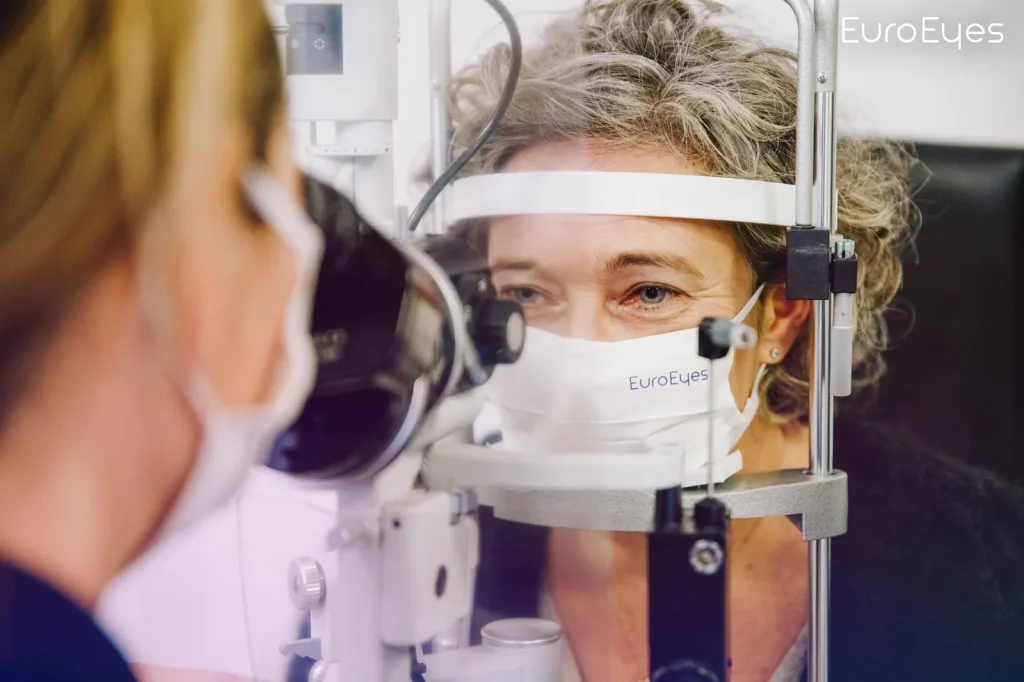
At the free, no-obligation assessment, the optometrist assesses your options and clarifies which treatment may be relevant for you. Together, you go through the possible benefits of the recommended treatment.
2. Measurements
If you choose FS-LASIK, we take further measurements before the treatment. Before this examination, you must avoid wearing contact lenses for at least one week, as they can change the shape of the cornea and thereby affect the measurements. If you wear hard contact lenses, you must avoid them for at least two weeks before the examination.
During the measurement session, the sight test is carried out after you have been given pupil-dilating eye drops. The drops can affect your vision for up to 24 hours, so we advise against driving immediately after the examination.
3. The FS-LASIK treatment
On the day of the treatment itself, you can eat and drink as usual, but you should not smoke. You should also refrain from using facial products, make-up and perfume. Bring a companion if possible.
When you arrive at the clinic, you will be welcomed by a nurse, who will offer you a calming tablet and make sure you feel at ease. The treatment is performed with local anaesthetic eye drops and therefore does not normally hurt. The treatment of both eyes takes around 25 minutes.
Method
Measurement
First, the individual characteristics of the cornea are measured (wavefront optimisation).
Femtosecond laser
The corneal lamella (the flap) is created with the femtosecond laser. The flap is gently lifted, after which the laser works tissue-sparingly and precisely according to the individual settings.
Excimer laser
Correction of the refractive error – wavefront optimised
The excimer laser begins the correction of the refractive error: at every point on the cornea, the specific refractive error at that spot is corrected. The excimer laser works in the area beneath the flap previously created by the femtosecond laser.
Short rehabilitation time
Once the excimer laser has done its work, the flap is carefully laid back over the treated corneal surface. The corneal lamella quickly seals itself in place thanks to the eye's natural suction (adhesion) and closes over the surface like a natural plaster. The rehabilitation time is therefore short compared with other eye treatments.
Key benefits
Rapid results
Many patients see clearly within hours of treatment.
High precision
Fully computer-guided and adapted to your individual measurements.
Wide range
Corrects myopia, hyperopia and astigmatism.
Comfortable
Performed with local anaesthetic eye drops. Most people therefore feel little or no discomfort during the treatment and may experience mild, short-term dryness afterwards.
Quick recovery
Back to most activities the next day.
Proven track record
Decades of clinical evidence worldwide.
Advantages of FS-LASIK
- Outpatient, pain-free treatment
- Treatment of higher refractive errors
- Greater safety and precision
- Treatment even with thin corneas
- Minimisation of incision-related complications
- Total duration of the eye treatment: approx. 25 minutes
- Rapid normalisation of vision
- Improved quality of vision: better visual acuity, contrast vision and night vision
- Fit for work after approx. 2–3 days
- A combination of two of the safest and most advanced laser eye methods: FS-LASIK (wavefront optimised)
- An individually tailored laser eye treatment
Is this treatment right for you?
LASIK may be relevant for a broad range of prescriptions in adults with healthy eyes and sufficient corneal thickness. At the assessment, we clarify whether LASIK or another treatment may be relevant for you.
Requirements for an FS-LASIK treatment
- You must be at least 18 years old
- Your vision must have been stable for 1–2 years
- You must have sufficient corneal thickness
- Your vision may only have changed by about 0.5 D within the last 2 years
- You must be neither pregnant nor breastfeeding
- You must not have any eye diseases
Suitability guide
Which treatment might be relevant for you?
Four quick questions for a first, no-obligation indication of which treatments may be relevant in a situation like yours.
Anonymous and non-binding. This is guidance, not a medical assessment or diagnosis.
Recovery & aftercare
LASIK recovery is famously quick. Your eyes may feel gritty or watery for a few hours, but vision usually sharpens dramatically the same day. You will use antibiotic and lubricating eye drops for about a week.
After the treatment, you should avoid rubbing your eyes. You will need to use antibiotic and lubricating eye drops for a period. Before the treatment, we go through how often you should use the drops, and you are given drop instructions. You will typically be able to return to work after 2–3 days, depending on the nature of your work.
You should wait 3 days before resuming sporting activities. To limit the risk of infection, you should wait about 2 weeks before visiting a swimming pool or sauna.
Follow-up checks are carried out after the treatment. These will be scheduled after about one day, one week and six weeks.
Avoid rubbing your eyes and keep water, soap and dust away from them for the first few days. Most people return to work the next day, with follow-up checks at one day, one week and one month.
Why choose EuroEyes?
An experienced treatment team
You are accompanied by our experienced team throughout – from the assessment to the final follow-up check.
Treatment volume
More than one million eyes treated across the EuroEyes group worldwide.
Aftercare included
Scheduled follow-up checks are included in your all-inclusive treatment price.
Advanced technology
We use advanced, modern technology for eye treatment.
Peace of mind and quality
We offer a lifelong peace-of-mind guarantee on treatments performed at EuroEyes.
Award-winning expertise
Our surgeons are Europe's most experienced experts in trifocal lens implantation.
Learn more at our free webinars and information evenings
We regularly hold information evenings and webinars where our eye doctors explain the treatments at EuroEyes and answer questions.
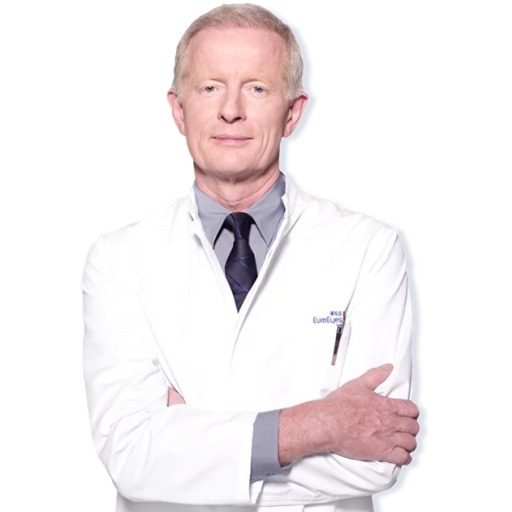
“For the right patient, LASIK delivers fast, predictable results – it remains one of the most refined procedures we offer.”Dr. Jørn Slot Jørgensen – Founder, Medical Director and CEO of EuroEyes
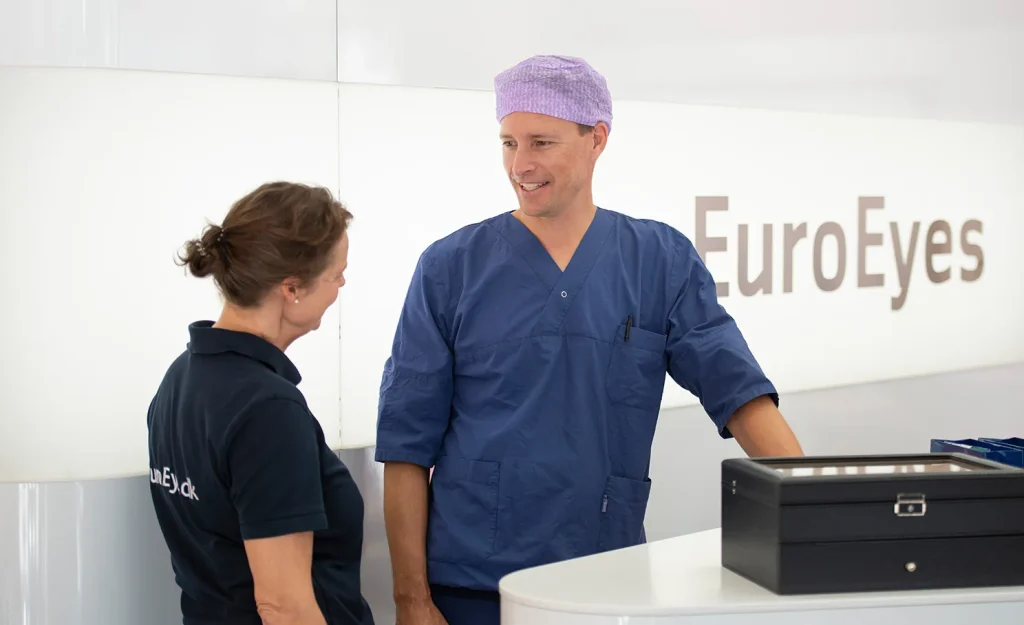
Expert care at EuroEyes
What our patients say
Independent reviews collected by Trustpilot.
697 reviews on Trustpilot
Reviews on Google
Frequently asked questions
Does LASIK hurt?
No. Before the treatment, you are given local anaesthetic eye drops, so the treatment does not normally hurt. Afterwards you may feel a mild gritty sensation for a few hours.
How quickly will I see?
Most patients notice a clear improvement within a few hours. You may only drive again once a check-up has confirmed that your vision meets the legal requirements.
How is LASIK different from SMILE Pro?
In LASIK a corneal flap is created, while SMILE Pro is performed without a flap and removes a lenticule through a small opening. You will be advised on which method may be relevant for you.
Is LASIK permanent?
Yes – the corneal correction is permanent, though age-related reading changes can still occur later.
Can both eyes be treated the same day?
Yes, both eyes are usually treated in the same short appointment.
Is there an age limit for laser eye treatments?
Laser treatment is possible from the age of 18 at the earliest
Must my vision be stable before the treatment?
Your vision must have been stable for 1–2 years before the treatment
Will I be able to see immediately after a laser treatment?
It depends on the treatment method used. With the ReLEx SMILE method, vision is expected to be good, though not yet optimal, the day after.
It improves over the course of the first week or so. With the LASIK treatment, the patient can often see well as early as the day after the treatment.
The results of the PRK/LASEK methods are very similar to those of ReLEx SMILE, but the healing process is longer, so it takes more time until the desired result is achieved. Full visual acuity typically arrives after a couple of weeks.
PRK/LASEK treatment may be relevant for thinner corneas and for people who practise martial arts.
When can I wear make-up, swim or use the sauna again?
Make-up, swimming and saunas are usually possible again after about two weeks. Chlorinated water can, however, irritate the eyes, so we recommend waiting a couple of months before bathing in chlorinated water.
What is PRK?
PRK, or photorefractive keratectomy, is the mother of all laser eye methods. In this treatment (which is also well suited to thin corneas), the epithelial cell layer is shaped and minor refractive errors are corrected. PRK is only possible for up to −6 dioptres and astigmatism of up to 3 dioptres. After one to two weeks you have good vision, but you no longer have a Bowman's membrane.
What is LASIK?
LASIK is a well-documented laser eye treatment that has been used for decades. The name is short for laser in situ keratomileusis. Worldwide, more than 17 million patients have been treated with LASIK. The excimer laser gently changes the shape of the cornea, and the treatment may be relevant for short-sightedness, long-sightedness and astigmatism.
What is ReLEx SMILE?
This is a newer laser method that is particularly gentle on the eye. The method can reduce dry-eye symptoms and the risk of infection.
Can eye surgery make you blind?
The risk of serious complications is very small, because the treatment takes place in the cornea and not near the optic nerve. At EuroEyes, we work to high quality and hygiene standards.
Arrange your free assessment
Book a free, no-obligation assessment and find out whether LASIK may be relevant for you.
Related to LASIK
Explore the conditions LASIK can correct, the alternatives we offer, and the surgeons who perform the treatment.